Along the Trail: Lexington and Concord, 250 Years On
A photo companion to "Waiting For Angels"
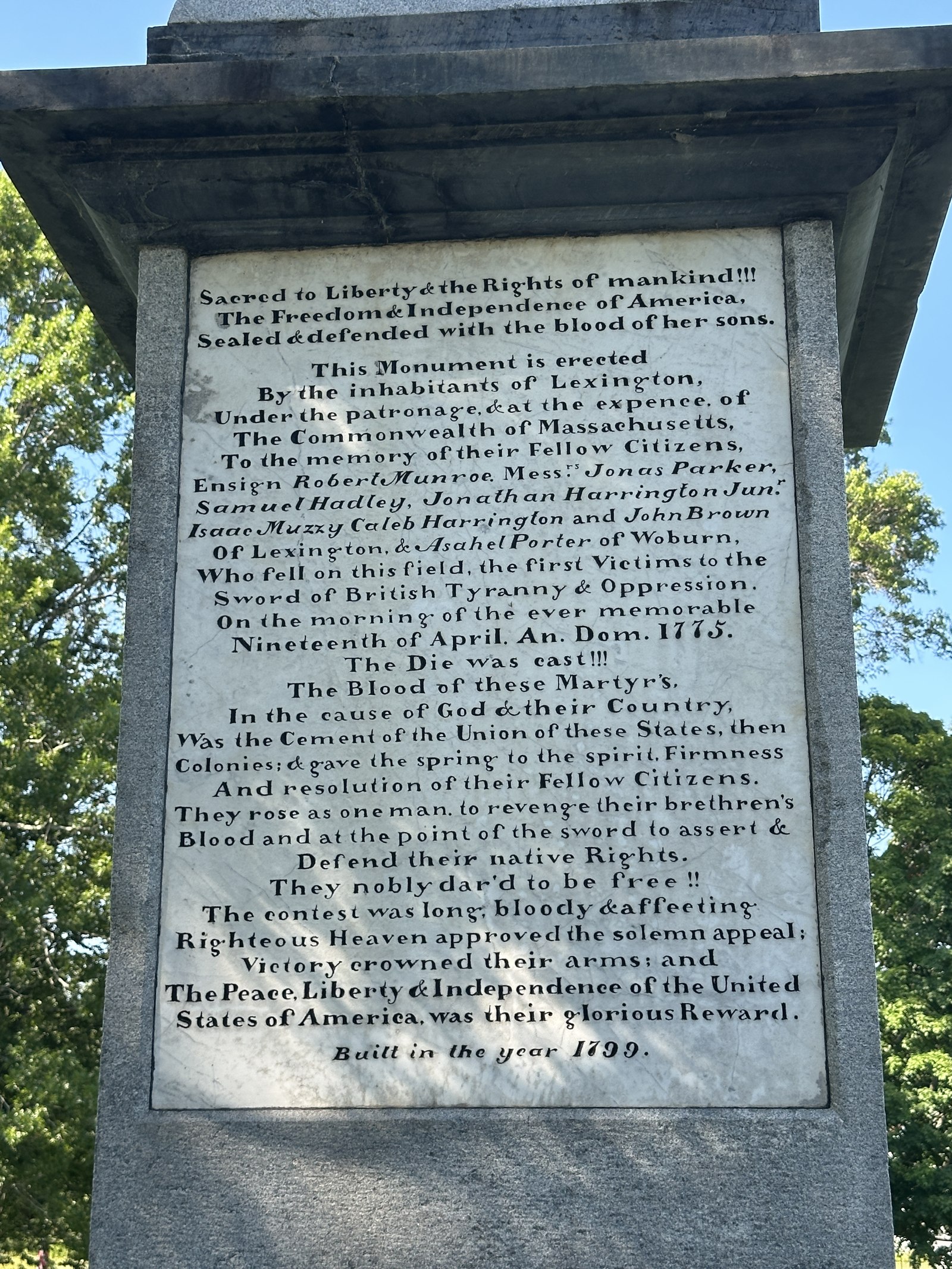
“Sacred to Liberty & the Rights of Mankind.” The 1799 monument on Lexington Battle Green names the eight men who died there — Robert Munroe, Jonas Parker, Samuel Hadley, Jonathan Harrington Jr., Isaac Muzzy, Caleb Harrington, John Brown, and Asahel Porter of Woburn — and calls the fight that killed them “the first Victims to the Sword of British Tyranny & Oppression.” It was erected by the town itself, at its own expense, under the patronage of the Commonwealth — a reminder that “consent of the governed” was, from the very start, something a town could organize and pay for on its own initiative, not something handed down.
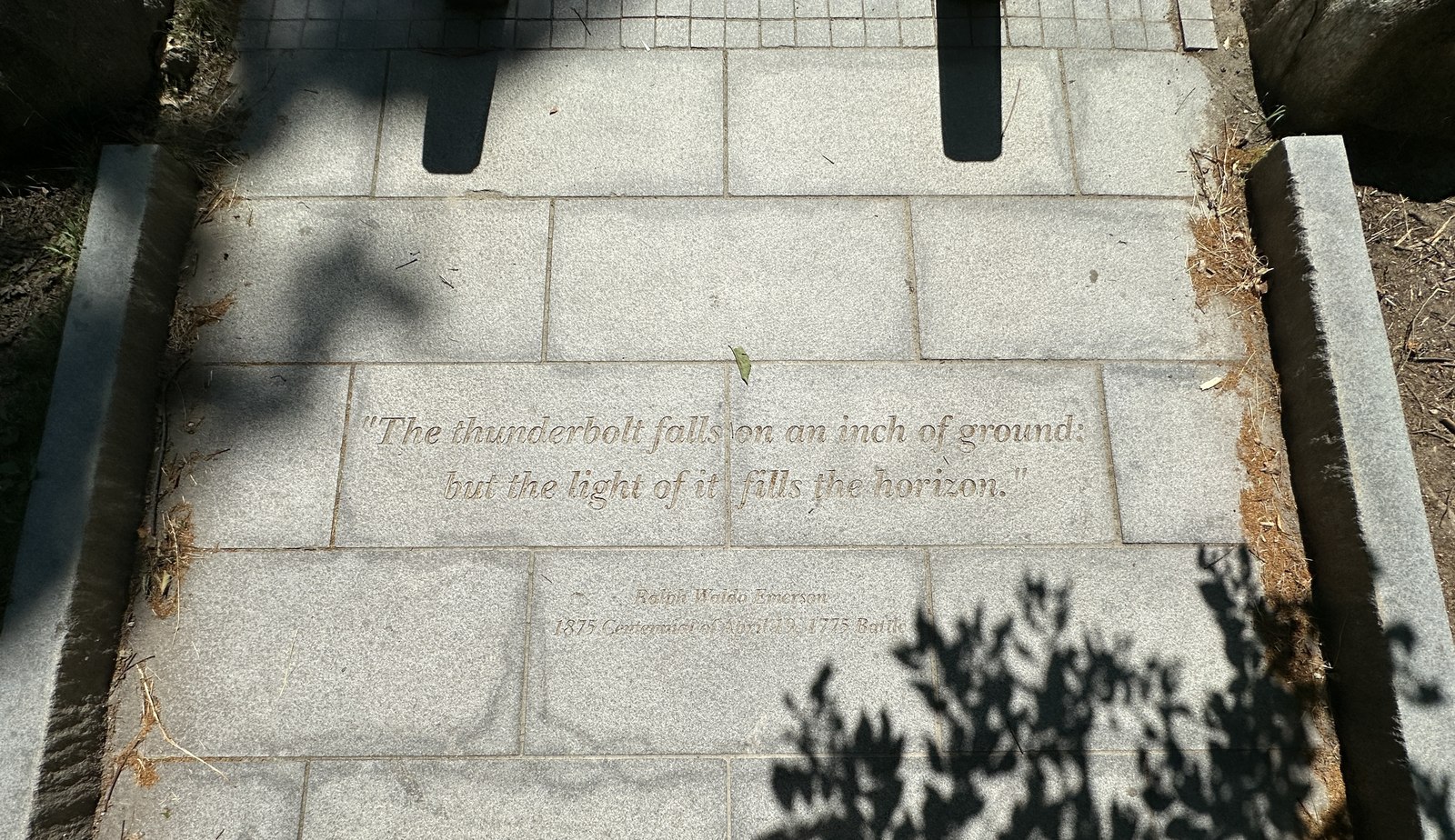
“The thunderbolt falls on an inch of ground; but the light of it fills the horizon.” Emerson wrote this for the 1875 centennial of the battle, and the stone bearing it sits on the parking-lot side of the road to Old North Bridge — easy to miss, and most people do walk right past it without stopping. That's worth sitting with: the actual event took a few minutes on a few hundred yards of riverbank. The light from it is still arriving, 250 years later, mostly unnoticed by people hurrying toward the more photogenic bridge.
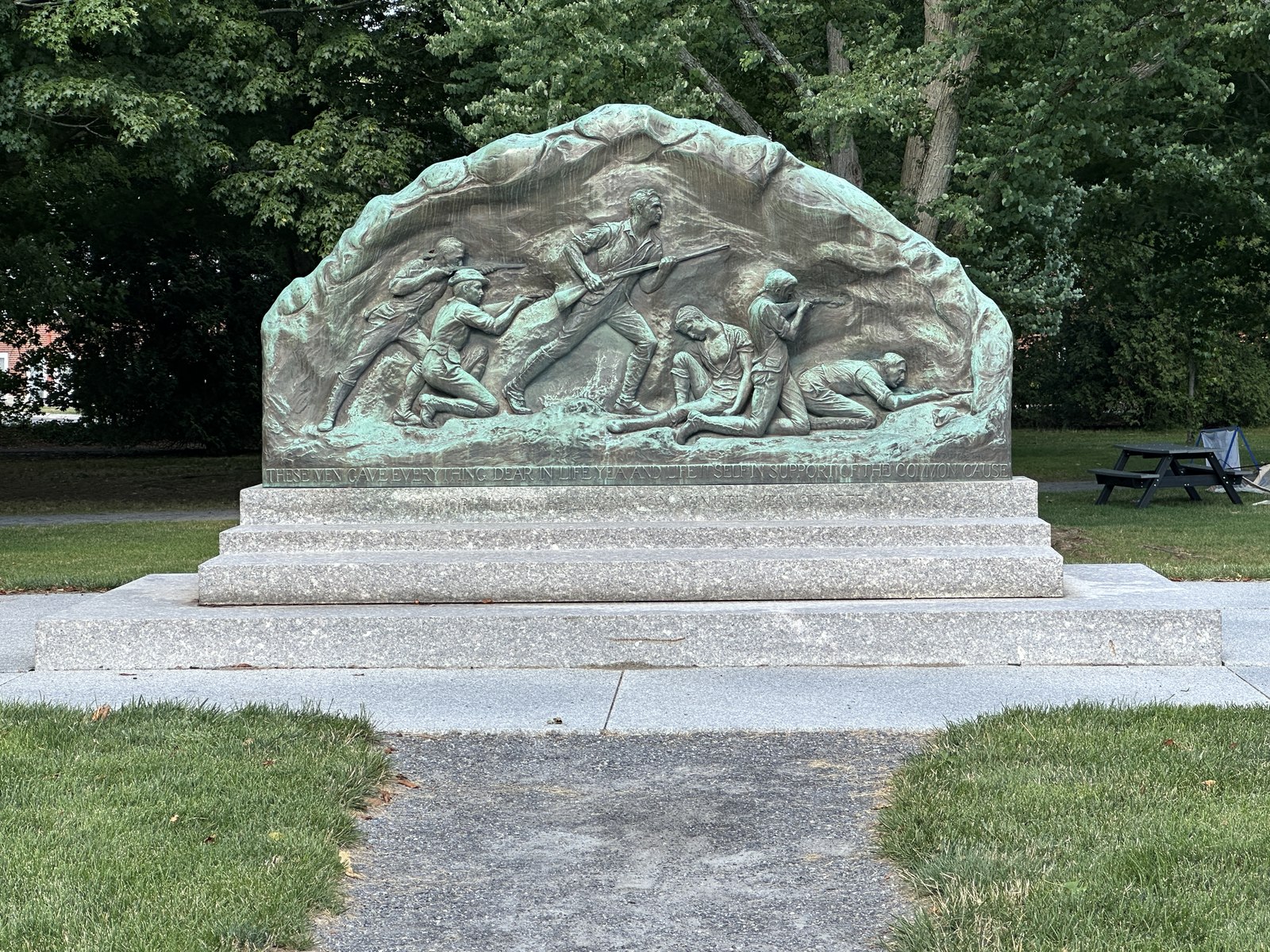
“These men gave everything dear in life, yea and life itself, in support of the common cause.” The bronze relief memorializing the Lexington Minute Men doesn't name a King, a Parliament, or a specific grievance — it names a debt. That's a useful frame for a records request or a Consent Agenda fight, too: the obligation runs both directions, and someone has to actually show up to collect on it.
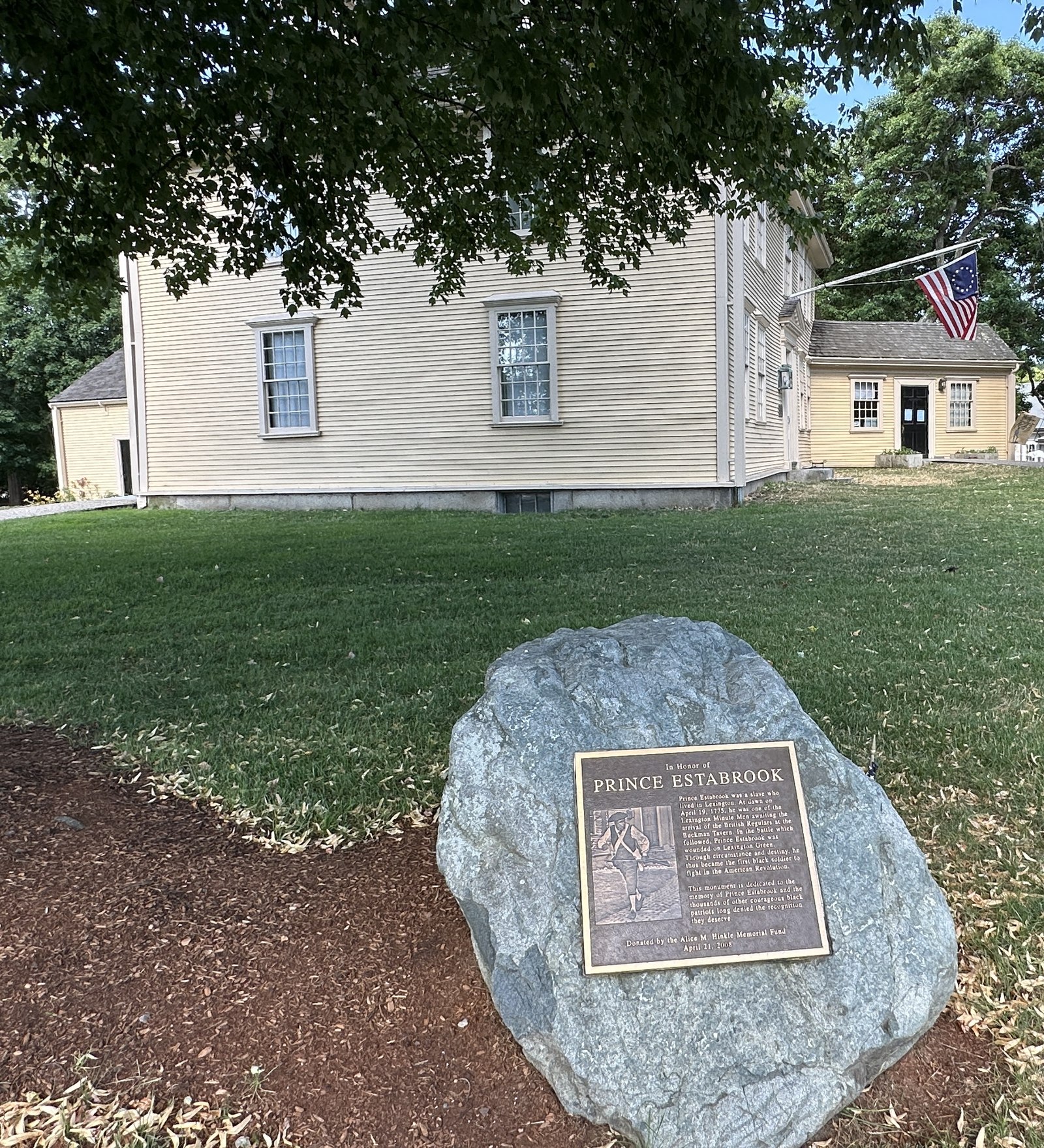
Prince Estabrook. Enslaved in Lexington, he stood with the Minute Men at Buckman Tavern at dawn on April 19, 1775, and was wounded on the Green — becoming, “through circumstance and destiny,” the first Black soldier of the Revolution. He fought for a liberty the law did not yet extend to him. No accounting of what this day means is complete without that fact sitting right next to the fireworks.
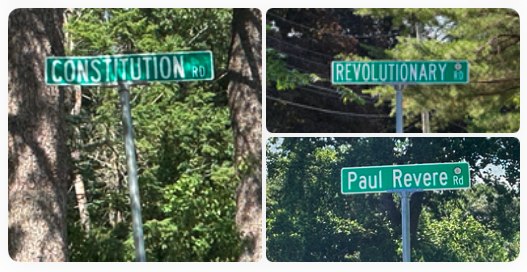
Revolutionary Rd. Constitution Rd. Paul Revere Rd. Somewhere in the enclave of streets between the North Bridge Visitor Center and the battlefield, the town just started naming roads after the argument itself. You could not ask for a tidier illustration of a place where the 18th century isn't history so much as zoning.
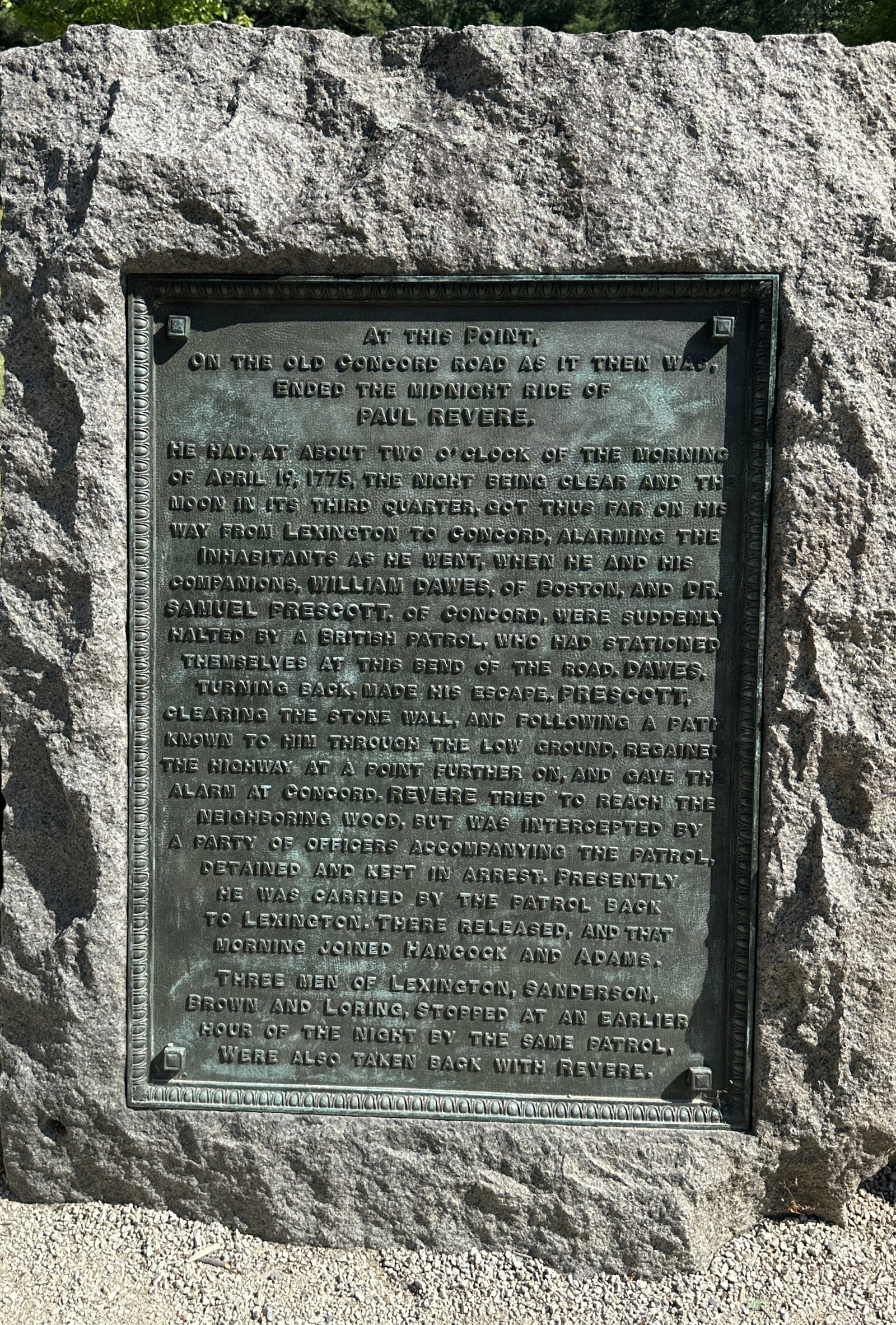
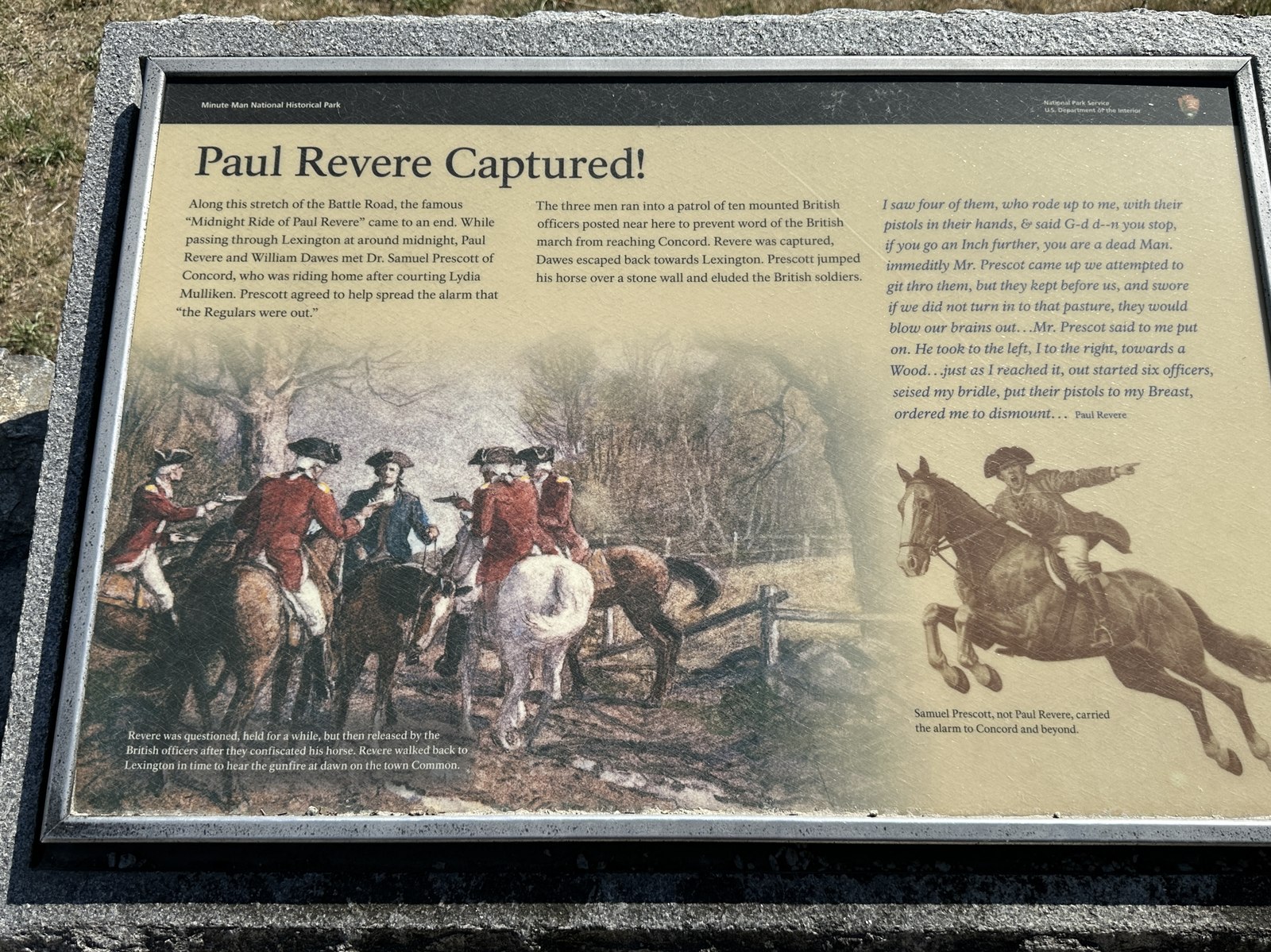
1:30 a.m., April 19, 1775. The spot where William Dawes, Paul Revere, and Samuel Prescott were stopped by a British patrol — Revere captured, Prescott the only one of the three who made it all the way to Concord to complete the warning. The lesson embedded in the stone: the message getting through at all depended on more than one rider, because any single messenger can be stopped. Redundancy isn't a bureaucratic virtue. It's how the alarm actually survives contact with power that wants it silenced.
1:30 a.m., April 19, 1775.
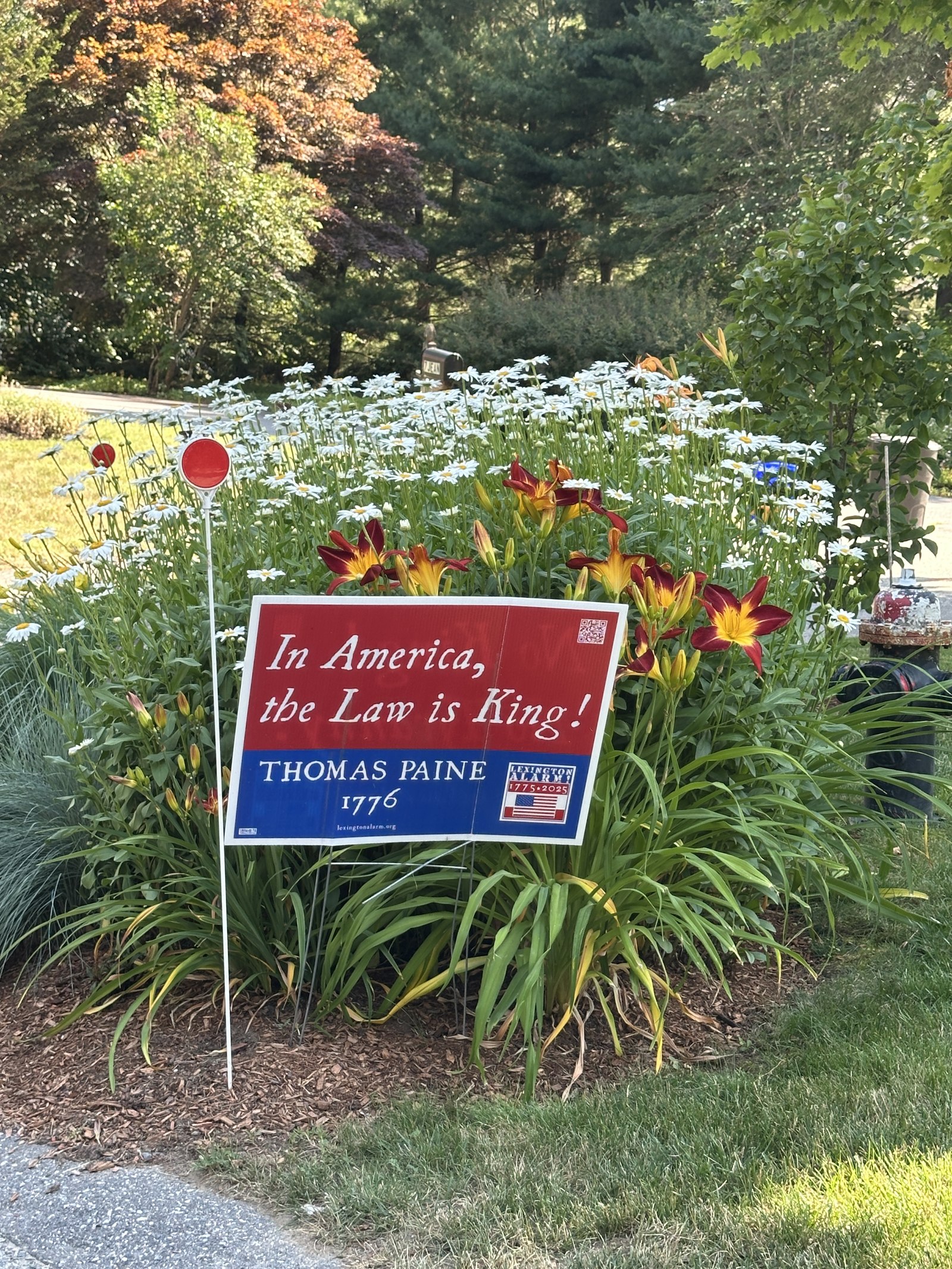
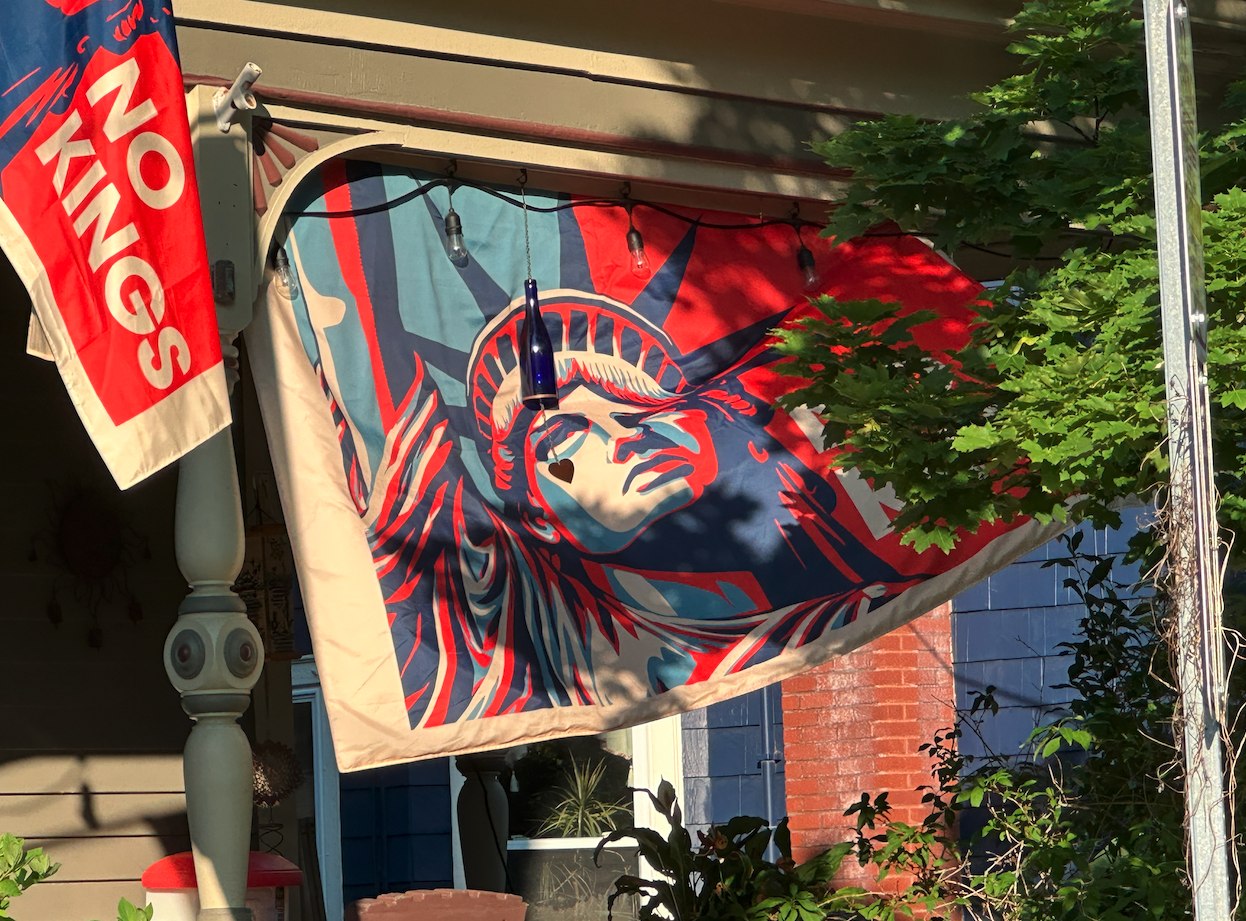
“In America, the Law is King.” Paine wrote this in Common Sense to make the opposite point Hutchinson would later try to make about his own conduct: that the law is meant to bind the powerful, not simply to clear them. A Lexington front yard, 250 years later, still finds that worth putting on a sign.
“No Kings.” Whatever one makes of the banner's moment, the sentiment is not new to this town — it's the same argument Lexington was making with muskets in 1775, printed now on canvas instead of forged into a grievance list. The medium changes. The complaint about unaccountable power doesn't.
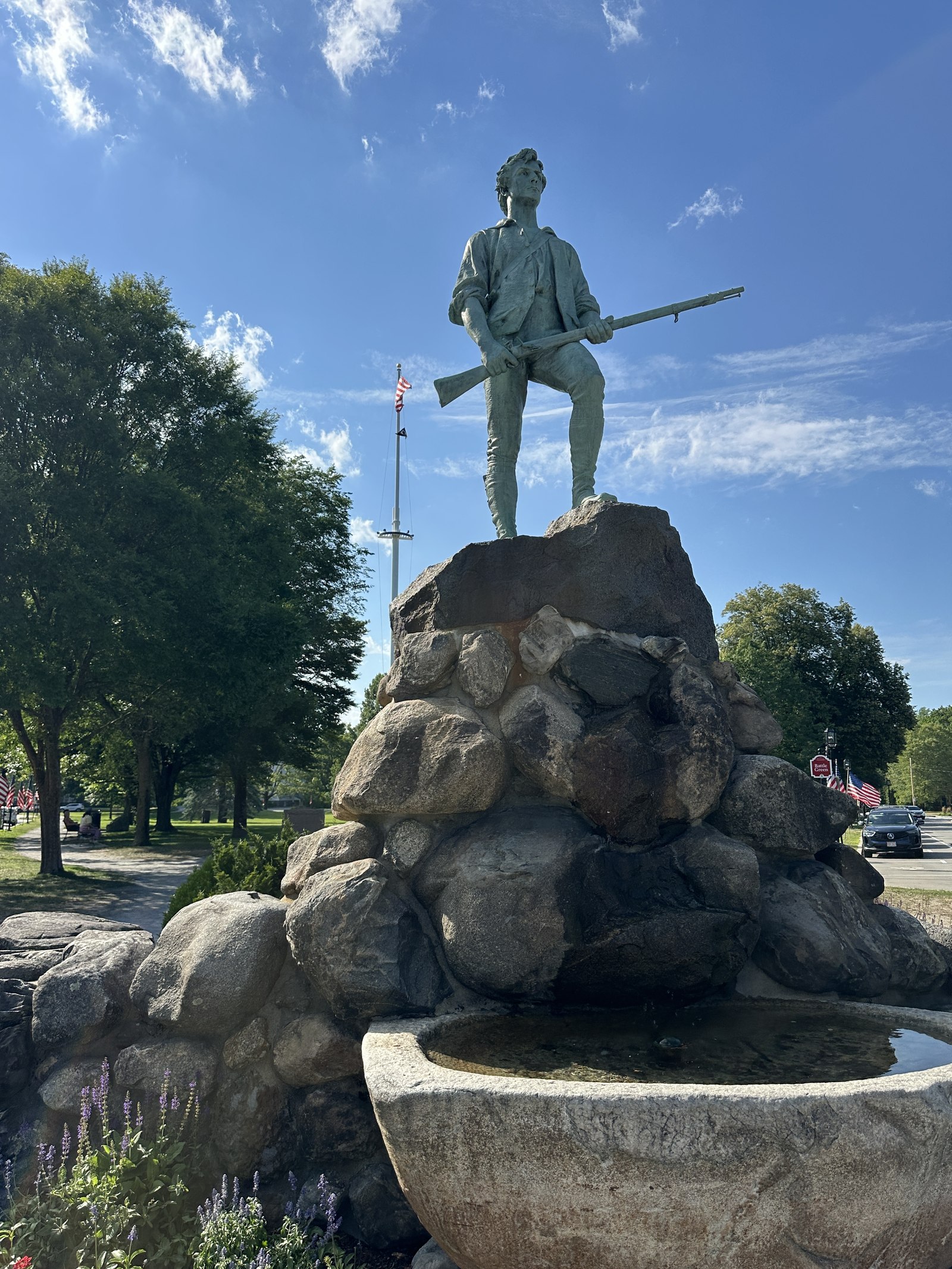
“No Kings.” Unveiled in 1900, this work by Boston sculptor Henry H. Kitson honors Captain John Parker and the Lexington Militia.
A disclosure: Photos taken along the trail from the Old North Bridge to Malden, Independence Day weekend, 2026.