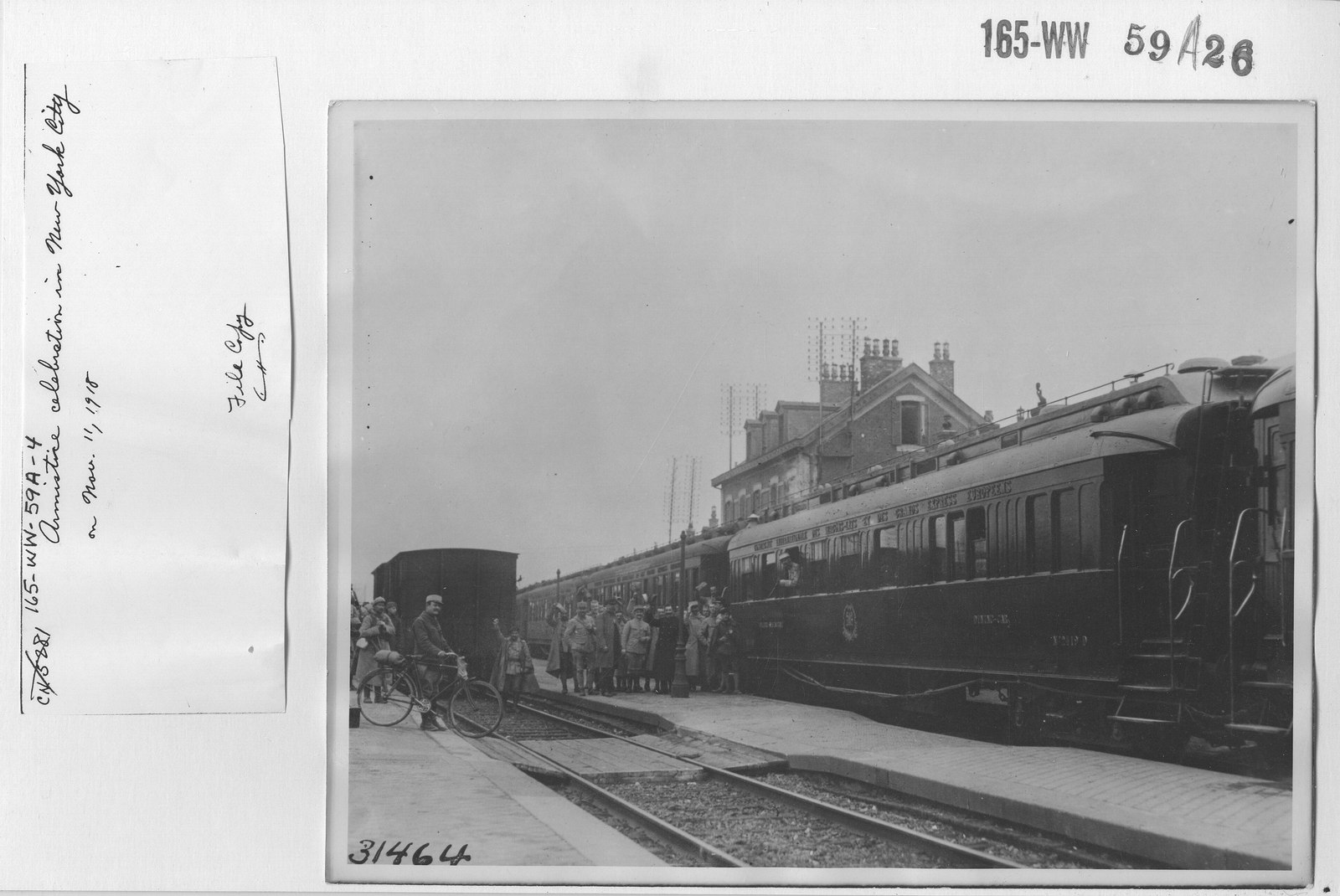
The eleventh hour
At 11 a.m. on November 11, 1918, the guns of the Western Front fell silent under an armistice that had been signed in a railway carriage in France earlier that morning. The agreement ended the fighting of the First World War, although the peace treaty itself was not signed at Versailles until June 28, 1919.1 For the Americans who had served in what many called the war to end all wars, the eleventh hour of the eleventh day of the eleventh month became the moment the war ended in memory, whatever the diplomats formalized later.
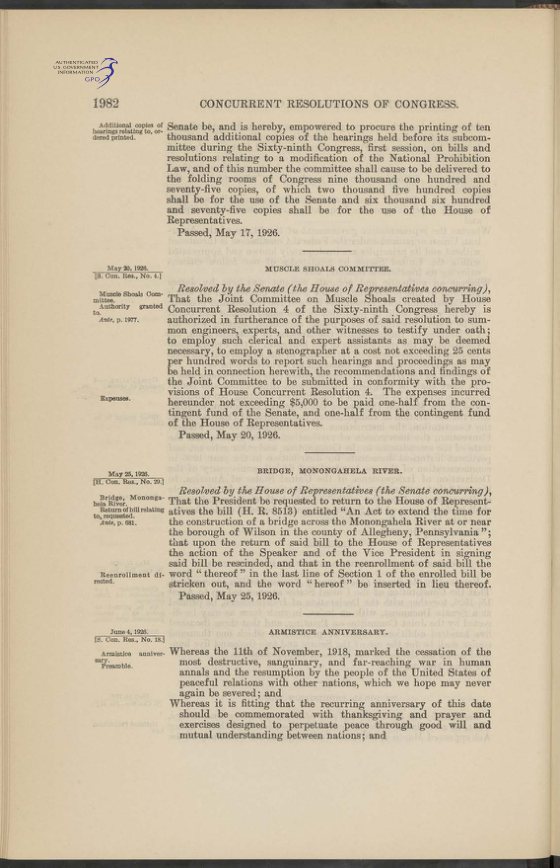
The first anniversary brought the first national observance. On November 11, 1919, President Woodrow Wilson released an Armistice Day message expressing solemn pride in those who died in the country's service. Many histories call it a proclamation, but the Northwestern law library notes it was a statement printed in the New York Times.2 In 1926, with twenty-seven state legislatures already marking the date as a legal holiday, Congress passed a concurrent resolution asking the President to proclaim an annual observance, and Calvin Coolidge did so that November.3
Armistice Day becomes law
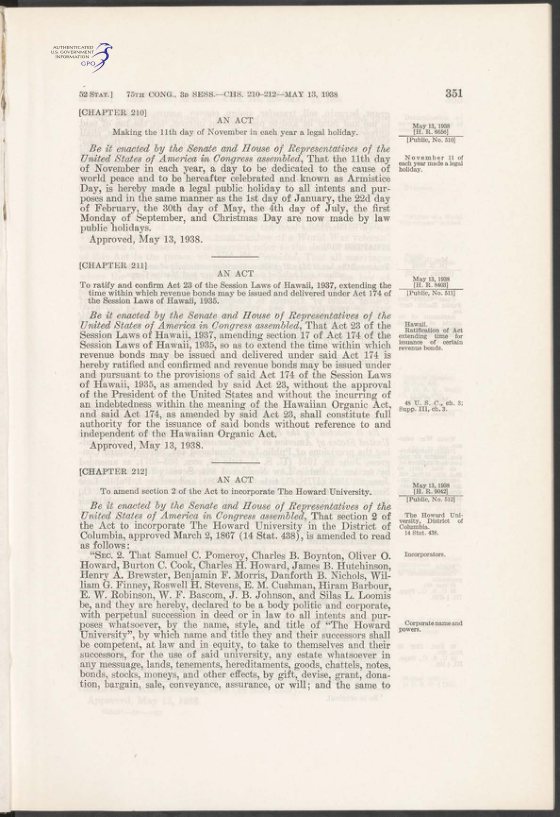
It took until 1938 for the day to become federal law. An act approved on May 13 of that year made November 11 a legal holiday, dedicated to world peace and to be known as Armistice Day.4 The language looked forward, not just back: the day was meant to promote peace, and in practice it was a day to honor the veterans of World War I.1
A day for all who served
Then came a second world war and the Korean conflict, and by the early 1950s a holiday tied to a single war no longer fit. Raymond Weeks, a World War II veteran from Birmingham, Alabama, led a delegation to General Dwight Eisenhower in 1946 to ask for a national Veterans Day, and Birmingham's annual celebration followed.5 Veterans' service organizations pressed Congress, and Representative Edward Rees of Kansas carried the bill.1
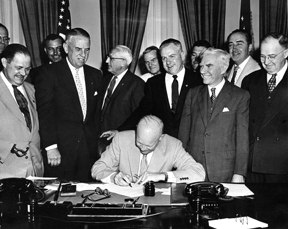
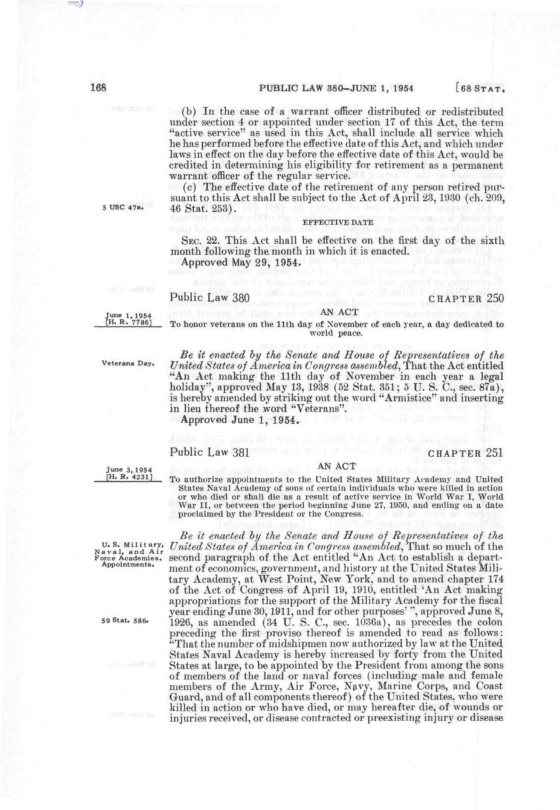
On June 1, 1954, Eisenhower signed H.R. 7786, Public Law 83-380, which struck the word Armistice from the 1938 act and inserted Veterans, making November 11 a day to honor American veterans of all wars.6 Later that year, on October 8, he issued Proclamation 3071 calling on citizens to observe Thursday, November 11, 1954, as Veterans Day, and directing that the flag be displayed on public buildings.7
The Monday experiment
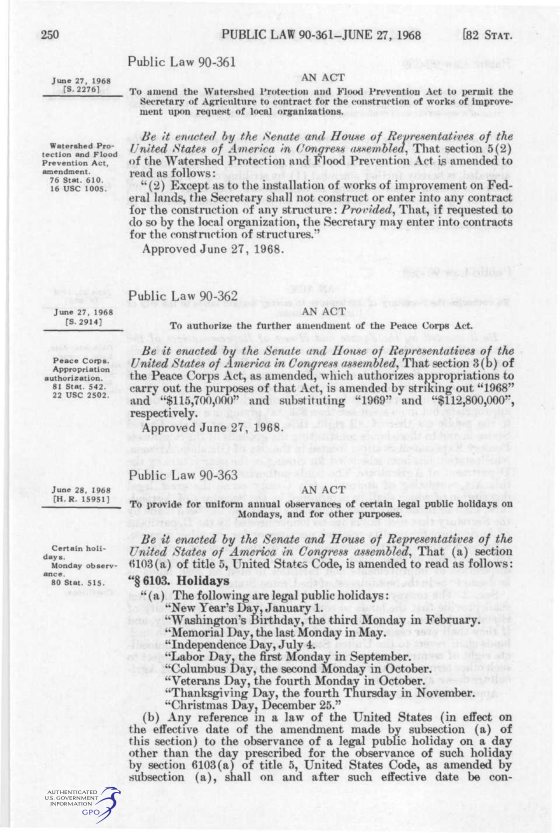
The date did not stay put. The Uniform Monday Holiday Act, signed in June 1968, moved Veterans Day to the fourth Monday in October starting in 1971, part of a plan to give federal workers a run of three-day weekends.8 The first Veterans Day under the new rule, on October 25, 1971, was met with confusion, and many states kept observing November 11 anyway.1
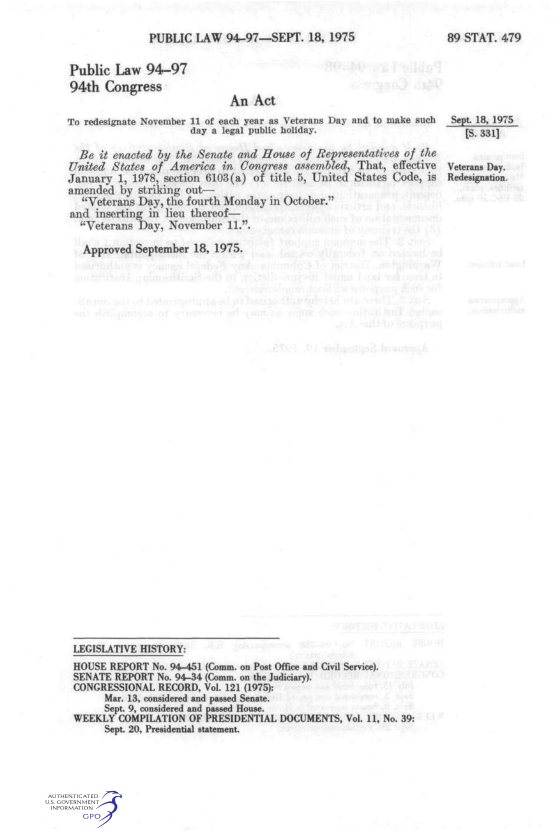
Congress eventually conceded the point. A 1975 law returned the observance to November 11 beginning in 1978.9 In a statement on the bill, President Gerald Ford said the date carried historic and patriotic significance for a great many citizens, and that restoring it would help keep alive the spirit of patriotism and willingness to serve and sacrifice that the day symbolizes.10 Since then Veterans Day has been observed on November 11, whatever day of the week it falls on.
What the day means
That history explains the holiday's double character. The date is a remembrance of an armistice and of the hope for peace written into the 1938 act, and it is also a thank-you to every American who has worn the uniform. It differs from Memorial Day, which honors those who died in service; Veterans Day is for all who served, living and dead, in war and in peace. In several other countries the same date is still kept as Armistice Day or Remembrance Day. Official usage drops the apostrophe: the day does not belong to veterans so much as it is set aside for them.
This year November 11 falls on a Wednesday. A century ago the day began with parades and a pause in business at 11 a.m., and the simplest observances still work: a moment of quiet at the eleventh hour, a flag on display, a call or a thank-you to a veteran you know, or a visit to a local ceremony. The statutes and photographs below are public records, and they are worth reading as the story of how a nation decided, over four decades, what it wanted to remember on this date.
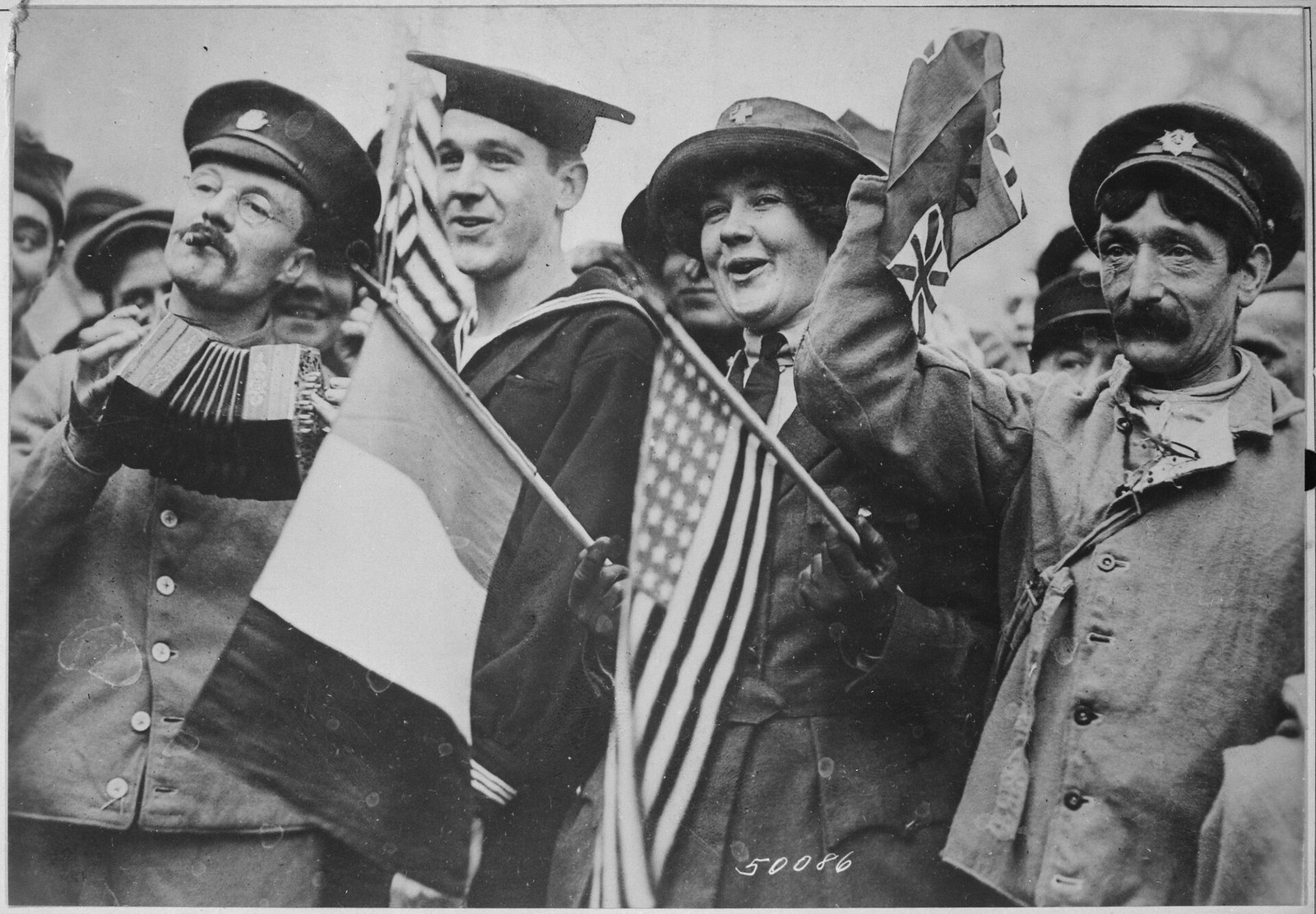
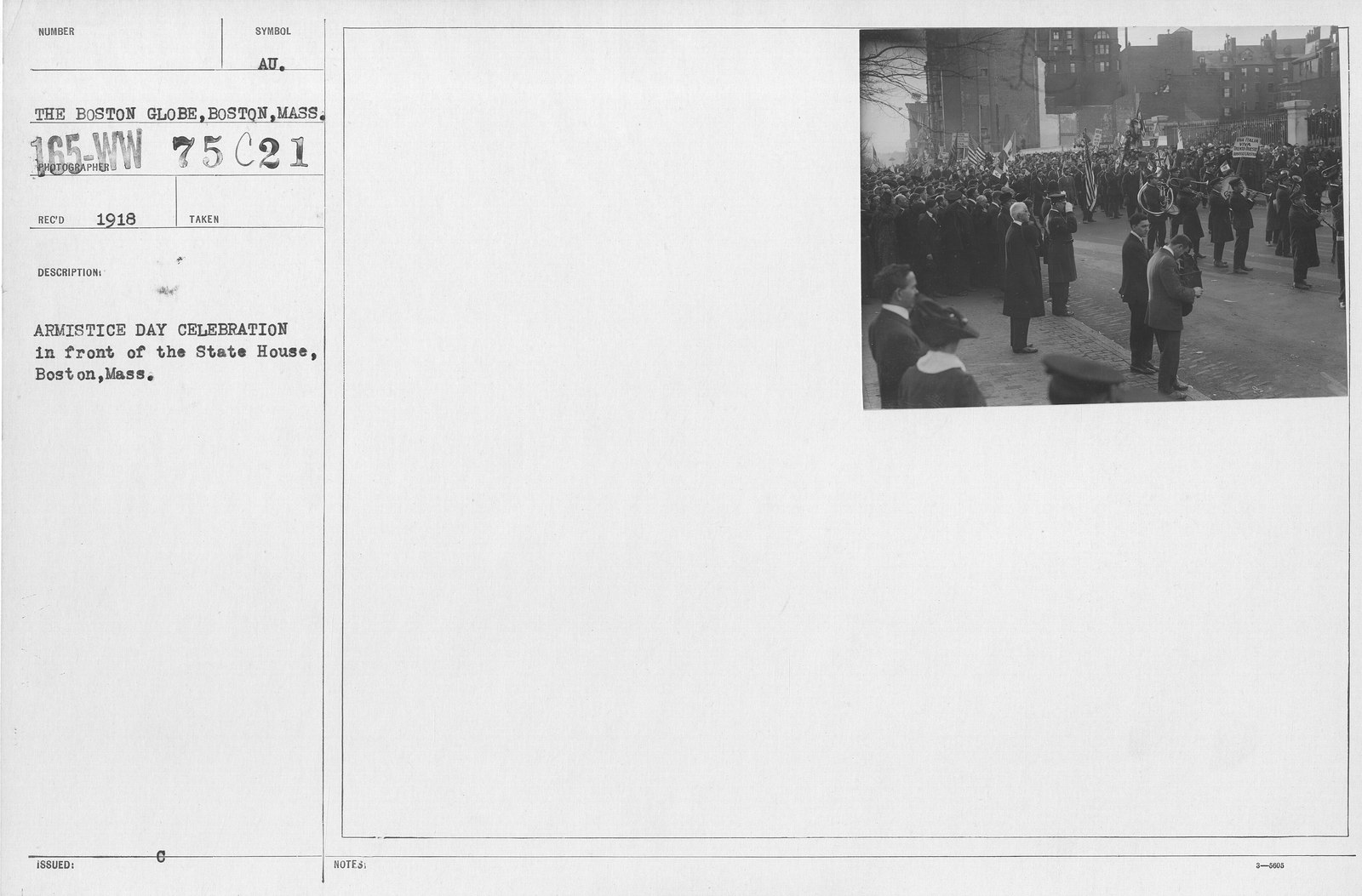
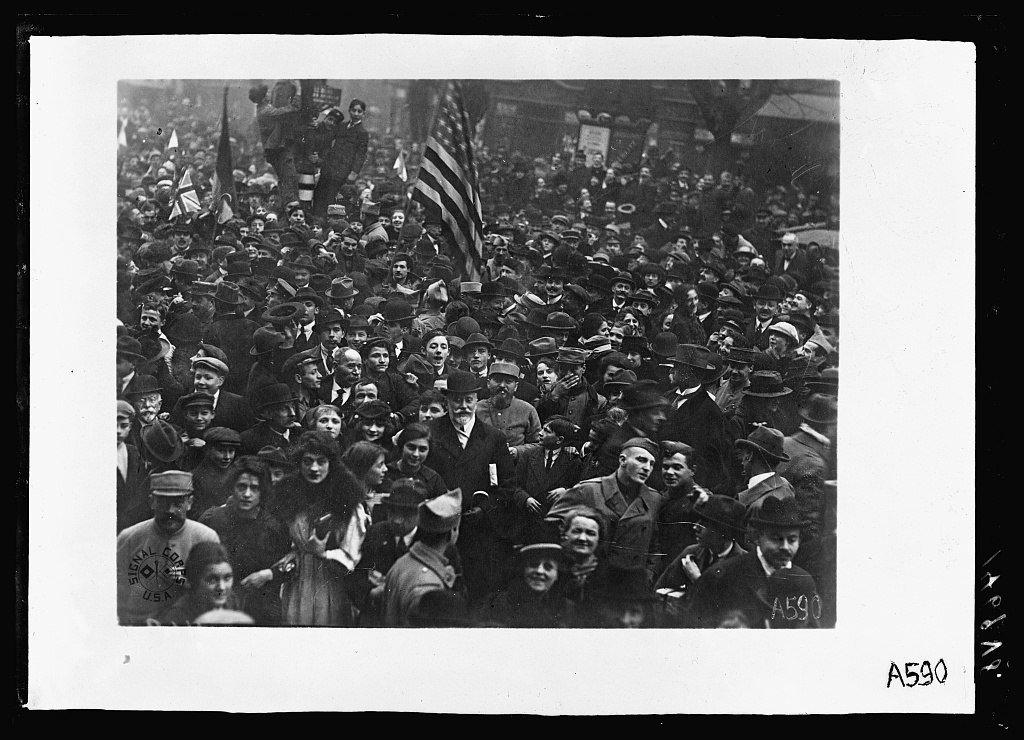
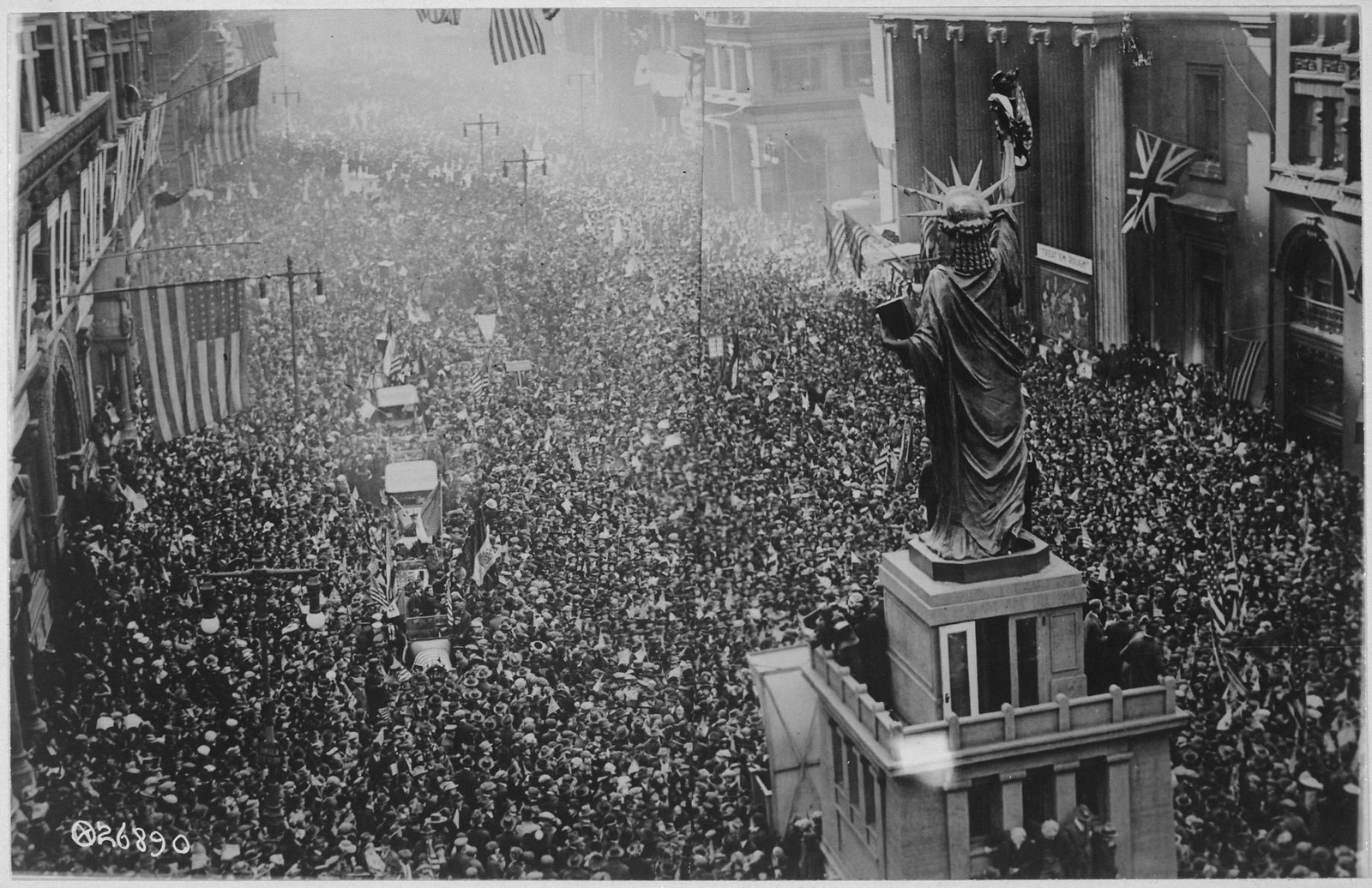
Photo gallery: Armistice Day, 1918
-
 PDF
Concurrent Resolution requesting an Armistice Day proclamation (June 4, 1926), 44 Stat. 1982Congress asks the President to call for annual observance of November 11.Open →
-
 PDF
-
 PDF
Public Law 83-380 (June 1, 1954), 68 Stat. 168Replaces 'Armistice' with 'Veterans' in the 1938 act.Open →
-
 HTML
Proclamation 3071, Veterans Day, 1954 (October 8, 1954)Eisenhower's first Veterans Day proclamation.Open →
-
 PDF
Public Law 90-363, Uniform Monday Holiday Act (June 28, 1968), 82 Stat. 250Moves Veterans Day to the fourth Monday in October, effective 1971.Open →
-
 PDF
Public Law 94-97 (September 1975), 89 Stat. 479Returns Veterans Day to November 11, effective 1978.Open →
-
 HTML
President Ford's statement on signing the bill redesignating November 11 (September 20, 1975)From the American Presidency Project.Open →
-
 HTML
U.S. Department of Veterans Affairs, History of Veterans Day (archived copy)VA's own account of the holiday's evolution, preserved by the UNT web archive.Open →
- Image source: New York, 1918. https://commons.wikimedia.org/wiki/File:Armistice_-_Armistice_-_Armistice_celebration_in_New_York_City_on_Nov._11,_1918_-_NARA_-_20807050.jpg
- Image source: Yanks and Tommies. https://commons.wikimedia.org/wiki/File:Armistice_celebration._Yanks_and_Tommies.,_11-1918_-_NARA_-_530789.tif
- Image source: Boston State House. https://commons.wikimedia.org/wiki/File:Ceremonies_-_Boston,_Mass._-_Armistice_Day_Celebration_in_front_of_the_State_House,_Boston,_Mass_-_NARA_-_23921385.jpg
- Image source: Paris, Library of Congress. https://www.loc.gov/item/2017666571/
- Image source: Philadelphia, National Archives via DocsTeach. https://www.docsteach.org/documents/document/announcing-armistice
- Image source: Eisenhower signing, VA photo (public domain). https://www.grandforks.af.mil/News/Photos/igphoto/2000899009/